Prévisions de l’Activité Solaire : Infos du SIDC-ON-RWC du 01/11 au 02/11/2022
Bienvenue au « Solar Influences Analysis Data9 Center » (SIDC), qui est le département solaire de recherche en physique de l’Observatoire Royal de Belgique .
Le SIDC comprend le Centre mondial de données pour l’indice d’activité solaire et le Centre d’alerte ISES de la Région de Bruxelles pour les prévisions météorologie spatiale.
Prévisions de l’Activité Solaire :Infos du SIDC-ON-RWC BELGIUM
du 01/11/2022 à 12h30 UTC
L’activité de torchage solaire au cours des dernières 24 heures était faible niveaux avec torchage isolé de classe C faible. Il y a quatre numéros actifs régions du disque solaire visible toutes classées comme bêta de type magnétique. NOAA 3135 a subi quelques développements et est actuellement le plus grand actif
région, mais est resté calme. NOAA 3130 a tourné presque entièrement derrière le flanc ouest produisant une éruption de classe C1.3. NOAA 3131 est resté stable et NOAA 3133 est resté petit produisant une fusée éclairante de classe C1.1. L’activité de torchage
devrait être à des niveaux très bas à bas au cours des prochaines 24 heures avec torchage isolé de classe C. Aucune éjection de masse coronale (CME) dirigée vers la Terre n’a été détectée dans le images coronographiques disponibles au cours des dernières 24 heures.
Le flux de protons supérieur à 10 MeV était à des niveaux nominaux au cours des 24 dernières heures et devrait le rester dans les prochaines 24 heures. Le plus grand que 2 Le flux d’électrons MeV a été principalement au-dessus du seuil de 1000 pfu au cours de la dernières 24 heures et devrait le rester au cours des prochaines 24 heures. Le 24h la fluence électronique a atteint des niveaux modérés et devrait le rester
au cours des prochaines 24 heures. Au cours des dernières 24 heures, les paramètres du vent solaire (ACE et DSCOVR) ont continué être sous l’influence du flux à grande vitesse (HSS) d’un point positif trou coronal de polarité. La vitesse du vent solaire a suivi une baisse tendance, allant de 570 à 436 km/s. Le champ magnétique interplanétaire était
faible avec une valeur maximale de 5,6 nT et un Bz minimal de -4,8 nT. La champ magnétique était principalement dans le secteur positif (dirigé loin de le soleil). Les paramètres du vent solaire devraient rester améliorés sur les prochaines 24 heures sous l’influence décroissante du HSS de l’actuel trou coronal à polarité positive géo-efficace et un nouveau HSS attendu
arrivée plus tard demain. Les conditions géomagnétiques au cours des dernières 24 heures étaient calmes à instables. Des conditions géomagnétiques calmes à actives sont attendues au cours des prochaines 24 heures en réponse au RSS en cours avec d’éventuelles périodes actives isolées et une
chance d’atteindre un niveau de tempête mineur plus tard le 1er novembre.
Source en anglais SIDC ICI


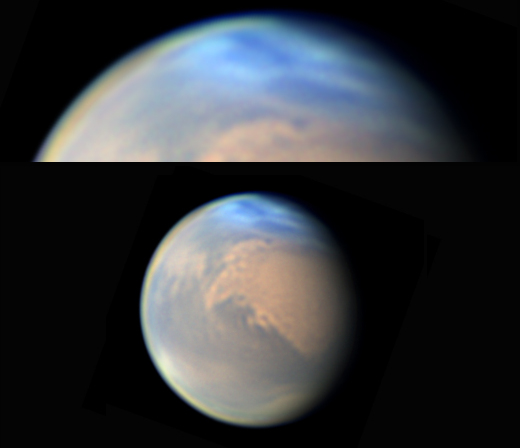 Williamson a photographié le North Polar Hood, un nuage géant de glace d’eau qui se forme



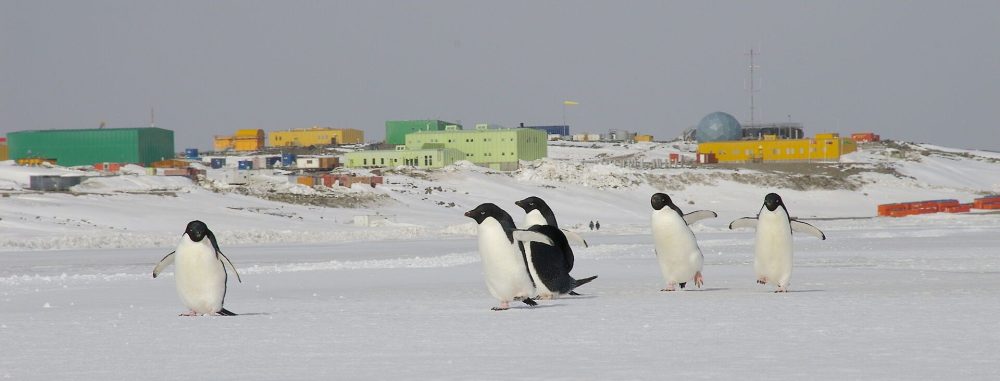
 In 1987 Greenpeace established the ‘World Park Base’ in Antarctica which stayed until 1991
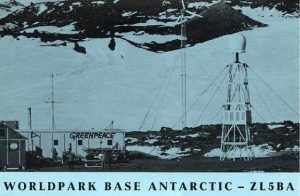 The main Bbase building was constructed in 1987 from prefabricated units, which were designed and manufactured by a German polar construction and engineering company. Between 1988 and 1990 several structures were added. Eventually, basebuildings consisted of an L-shaped main building and a small food storage and emergency building. The main building comprised an accommodation unit housing a common living area, four separate bedrooms, a bathroom, radio room, medical and science room, coat room and a room containing snow melting equipment. A cold porch was also attached. The engine room was housed in the same building, separated from theother facilities by a walkway. A lean-to was used for storage. The short side of the L-shaped building was formed by another unit joined to the main building by a walkway which housed a workshop, science lab, dark room and field equipment store. The latter unit, called the FOS hut, had been acquired from the Footsteps of Scott Expedition which had previously had a base at the site.
  The original base was designed to accommodate four persons. In later years, a workshop and laboratory building and two more bedrooms were prefabricated and added to the original structure as it became apparent that extra space was needed for the wintering teams. These additions were simple to construct andinstall, with minimum excavation necessary. Also installed on the base was amateur radio equipment for contact with Ham radio enthusiasts worldwide, and a Uosat satellite link that was part of a scientific project run in conjunction with the University of Sussex in the United Kingdom.