
Un module de transpondeur linéaire construit par AMSAT fait partie du satellite MESAT 3U qui sera déployé sur la prochaine mission ELaNa 43 de la NASA. MESAT-1 a été assemblé à l’Université
du Maine (États-Unis) et devrait être lancé en 2022.
MESAT-1 devait initialement être lancé en juin 2022 depuis la Vandenberg Space Force Base, en Californie, en juin 2022, mais le lancement a été retardé. Le satellite sera lancé en orbite
héliosynchrone à une altitude d’environ 555 kilomètres (350 miles) au-dessus de la Terre. MESAT-1 devrait rester dans l’espace pendant plus d’une décennie. La radio principale à bord de
MESAT-1 est un module transpondeur linéaire (LTM-1) d’AMSAT
Info de la Source * ICI


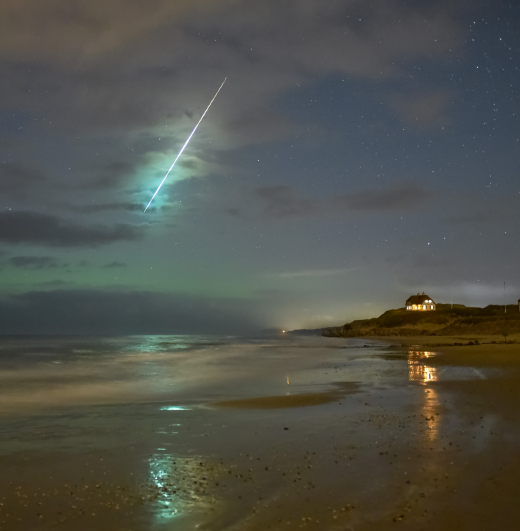


 Williamson a photographié le North Polar Hood, un nuage géant de glace d’eau qui se forme



 In 1987 Greenpeace established the ‘World Park Base’ in Antarctica which stayed until 1991
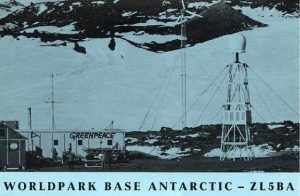 The main Bbase building was constructed in 1987 from prefabricated units, which were designed and manufactured by a German polar construction and engineering company. Between 1988 and 1990 several structures were added. Eventually, basebuildings consisted of an L-shaped main building and a small food storage and emergency building. The main building comprised an accommodation unit housing a common living area, four separate bedrooms, a bathroom, radio room, medical and science room, coat room and a room containing snow melting equipment. A cold porch was also attached. The engine room was housed in the same building, separated from theother facilities by a walkway. A lean-to was used for storage. The short side of the L-shaped building was formed by another unit joined to the main building by a walkway which housed a workshop, science lab, dark room and field equipment store. The latter unit, called the FOS hut, had been acquired from the Footsteps of Scott Expedition which had previously had a base at the site.
  The original base was designed to accommodate four persons. In later years, a workshop and laboratory building and two more bedrooms were prefabricated and added to the original structure as it became apparent that extra space was needed for the wintering teams. These additions were simple to construct andinstall, with minimum excavation necessary. Also installed on the base was amateur radio equipment for contact with Ham radio enthusiasts worldwide, and a Uosat satellite link that was part of a scientific project run in conjunction with the University of Sussex in the United Kingdom.
