
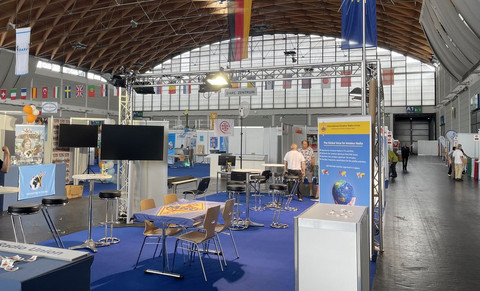
Chers amis radio d’ici et d’ailleurs – demain (vendredi 23 juin) ça commence, le HAM RADIO 2023 commence ! Oui,… ce jeudi matin vers 8h30, lorsque l’équipe du salon du bureau DARC est entrée pour la première fois dans le hall A1, les structures préparées n’avaient pas vraiment l’air d’un salon. Bien sûr – c’est le jour de la construction. Il est difficile de croire qu’il faut plus d’une journée pour que tout soit prêt, puis en beaucoup moins de temps pour le démonter le dimanche après la messe. C’est beaucoup plus rapide.
Au cours de la journée, cependant, l’image du salon qui nous est familière et que les visiteurs connaissent et apprécient a pris forme. Alors qu’une partie de l’équipe commençait à monter le grand stand de DARC au milieu du Hall A1, une autre partie s’occupait à monter le stand de DARC Verlag, notre magasin de marchandises dans le foyer et à équiper la scène d’action. Nos premières impressions ? Pendant la phase de planification, nous n’avions imaginé le nouveau concept de stand du DARC qu’en termes visuels – eh bien, maintenant qu’il est entièrement assemblé, il fait bonne impression. Tout est conçu pour être plus ouvert et spacieux. Vous pouvez être curieux. Le marché aux puces occupera probablement 1 1/3 des salles cette année, et il y avait tout autant d’activité à y trouver. Nous avons déjà vu de belles antennes et des appareils plus anciens. De beaux stands pouvaient déjà être vus dans le hall A1 en fin d’après-midi, mais nous ne voulons pas trop en dévoiler ici et laisser l’exploration aux visiteurs du salon eux-mêmes. L’équipe de construction, avec Messe Friedrichshafen, se réjouit maintenant de beaucoup de visiteurs ! On se retrouve?
Info de la Source * ICI









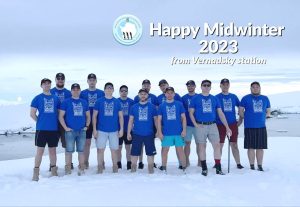 This is the main holiday of polar explorers, which marks the Midwinter, the shortest day and the longest night, but then, gradually, the days become longer, and summer is closer and closer.
 WAP
WAP