 |
 To celebrate the 30th Anniversary of Russian Robinson Club (RRC) a Special callsign RI3ØANT will operate from Vostok Base (WAP RUS-13) from January 1 to March 31, 2023.
Alex UG1A (ex.RD1AV), Ivan UB1AQB and Zahar (ex.UH4NAE) will be active during their spare time, all bands all modes. QSL via RZ3EC
The ufficial call of Vostok Station (WAP RUS-13), Antarctica RI1ANC will continue to be on air untill March 2024. QSL via RN1ON, CL OQRS Buro ONLY, Direct, Buro.
TNX Eugene RZ3EC & Oleg UA6GG-DX Tropy
Pour célébrer le 30e anniversaire de
Russian Robinson Club (RRC) un indicatif spécial RI3ØANTopérera à partir de la Base de Vostok (WAP RUS-13) du 1er janvier au 31 mars 2023.
Alex UG1A (ex.RD1AV), Ivan UB1AQB et Zahar (ex.UH4NAE) seront actifs pendant leur temps libre, toutes bandes tous modes. QSL via RZ3EC
L’appel officiel de la Station Vostok(WAP RUS-13), Antarctique RI1ANC continuera d’être diffusé jusqu’en mars 2024. QSL via RN1ON, CL OQRS Buro UNIQUEMENT, Direct, Buro.
TNX Eugene RZ3EC & Oleg UA6GG-DX Tropie
Info de la Source Publié * ICI



 New Zealand Sub-Antarctic Islands consist of five island groups: Snares, Bounty Islands, Antipodes Islands, Auckland Islands and Campbell Island, in the Southern Ocean south-east of New Zealand. The islands, lying between the Antarctic and Subtropical Convergences and the seas, have a high level of productivity, biodiversity, wildlife population densities and endemism among birds, plants and invertebrates.


 Cape Hallett 72°19’ South, 170°16’ East, was the location of a joint scientific base, Hallett Station, between the United States and New Zealand during the International Geophysical Year of 1957, and was manned permanently until 1964, when there was a major fire.
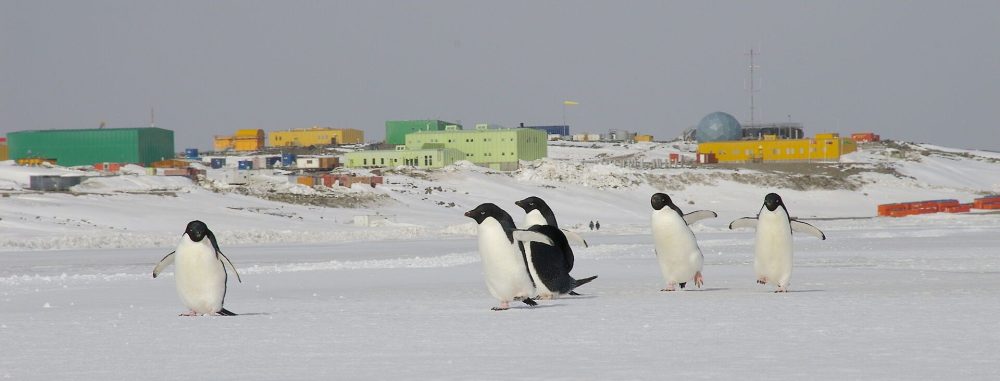
 At the time, thirty Navy men and scientists were stationed at a “rookery” near Hallett Station from October through February to study the over 100,000 Adelie penguins which populate the area. These birds, 18 inches tall and weighing 14 pounds, return annually to breed and raise their young. An area of 74 ha, is protected under the Antarctic Treaty System as Antarctic Specially Protected Area (ASPA) No.106 because it contains habitats with a rich and diverse range of plant communities that are the most extensive and representative examples known at the northern end of the latitudinal gradient of Victoria Land and the Ross Sea.
 The only activity known from Hallett Station (